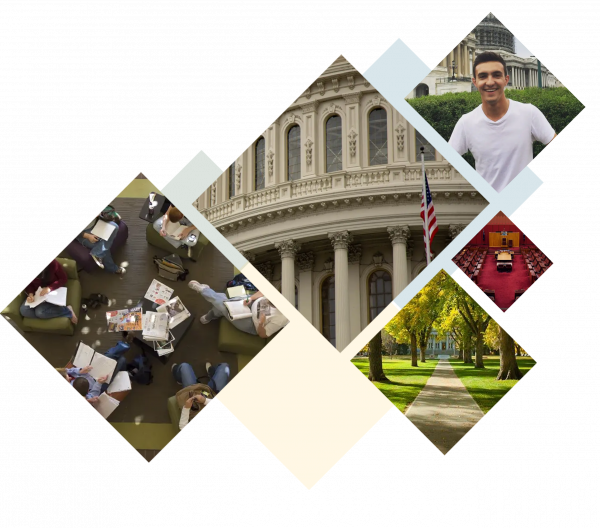
For hundreds of Colorado State University students, their college experience was highlighted by early mornings piling into a van headed for Denver, the hum of debate in the House and Senate chambers, the connections built in legislative offices, and the memories made over lunch during their time as legislative interns.
This year marks the 50th anniversary of the Legislative Internship Program—which has provided generations of students with hands-on learning experience within the inner workings of Colorado’s government.
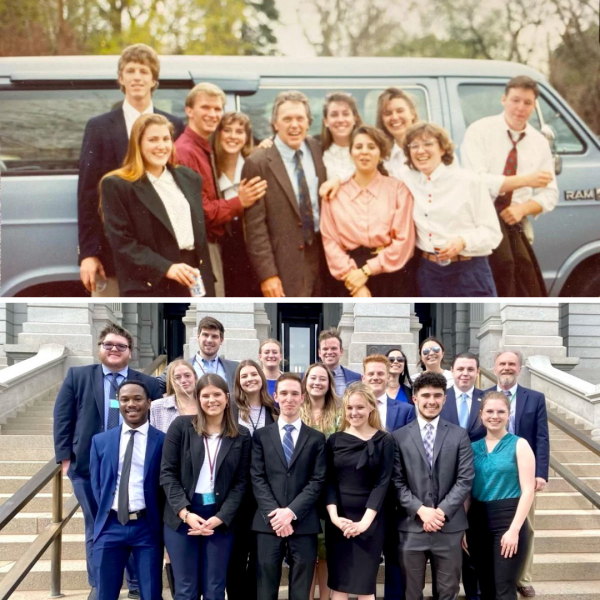
Bottom image: 2023 Legislative Interns with Bob Duffy, current Director of the program, on the steps of the Capitol
In 2017, the Department of Political Science expanded and deepened the Legislative Internship Program with the official launch of the Straayer Center for Public Service Leadership—honoring John Straayer’s legacy and commitment to civic leadership. For 50 years, Straayer has been a fixture not only in CSU’s political science department, but also in the halls of the Colorado State Capitol—directing the department’s Legislative Internship Program for more than forty of those years. Now led by Department Chair Robert Duffy, the Colorado Legislative Internship Program has overseen more than 1,200 students.
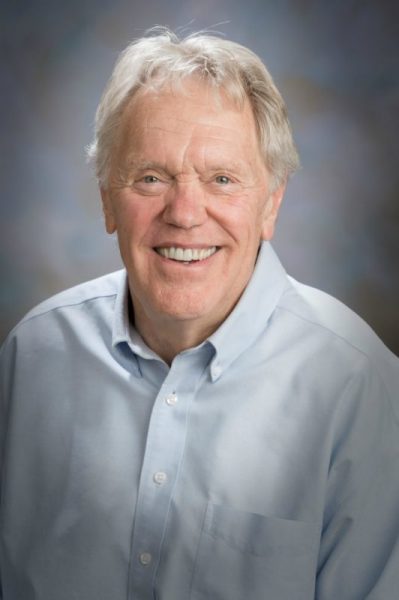
The development of the Straayer Center—which now houses the Legislative Internship Program—ensures that his legacy will continue for generations to come by training future public leaders with expanded teaching, research, service and outreach initiatives dedicated to public service leadership. Through their financial generosity, Straayer and his wife, Judy, established the Straayer Legislative Internship Program Endowment, ensuring the success of the Center and the continued growth of the Legislative Internship Program for years to come. In addition, they established the John Straayer Citizenship and Public Service Scholarship, which supports political science students participating in internships and helps provide access to the expanded internship opportunities available through the Straayer Center.
Under the leadership of Program Director Sam Houghteling, the Straayer Center for Public Service Leadership continues to set the standard for excellence in civic leadership. The center was founded with a mission to equip student leaders with the education, skills, and experience necessary to be successful public servants. It aims to provide thought leadership on public matters through university and community partners with a focus on experiential learning, curricular innovation, and community engagement.
The Straayer Center continues to build collaborative partnerships and programs that add value to our students, University, and communities across the state. One such program—the CSU in D.C. Internship—was developed in collaboration with the Straayer Center, the Department of Political Science, and The Washington Center to create an undergraduate semester in Washington D.C. Students enroll in 15 credits through CSU and complete a professional internship, seminar, and colloquium—all taking place in our nation’s capital!
The Legislative Internship Program and the Straayer Center’s dedication to public service and shared governance will continue to shape future generations of civic leaders.
To celebrate this milestone anniversary of the program and its students, faculty, and alumni—we will be hosting a weekend celebration on Friday, October 27 and Saturday, October 28, 2023 on the CSU Campus. Formal invitation to follow. If you have any questions, please contact Kelly McDonnell at kelly.mcdonnell@colostate.edu.
If you are interested in collaborating with the Straayer Center, here’s how alumni can get involved:
- Volunteer to speak with a class
- Serve as an advisor/fiscal supporter of the Straayer Center
- Provide financial support to one of our student scholarships
- Provide an internship or professional development opportunity through your organization
- Contact the Straayer Center at: sam.houghteling@colostate.edu