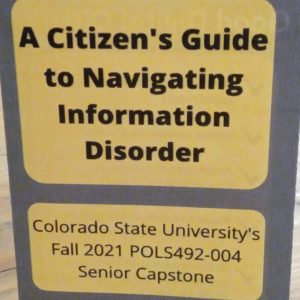
A political science capstone class looked beyond “fake news” to the root problem of information disorder in our democracy, and offered advice for citizens to responsibly combat misinformation, disinformation, and malinformation.
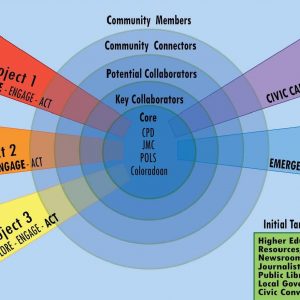
A group of Colorado State University faculty has joined forces with the Coloradoan newspaper on a project to improve Northern Colorado’s information ecosystem and address shared community problems more effectively.
Starting January 2022, a CSU research team will lead a project that will produce a map of the distributive implications of U.S. foreign policy – a map that will allow communities to better understand their relationship to America’s role in the world.
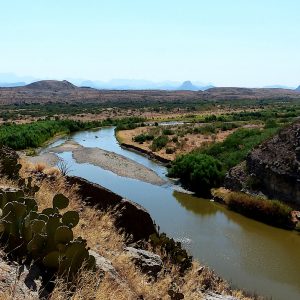
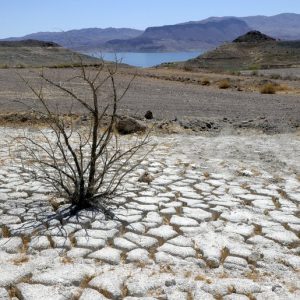
Since the 1990s, getting enough water has been a problem that — drop by drop — has only been compounded over the years for both sides of the U.S./Mexico border.
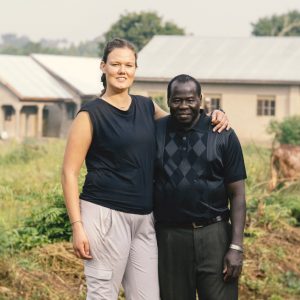
On Oct. 14, Colorado State University will host the long-awaited premiere of the documentary “Robert’s Village,” chronicling the efforts of CSU alumna Laura Schreck and CSU alumnus and custodian Robert Serunjogi to provide assistance to his hometown in Uganda.
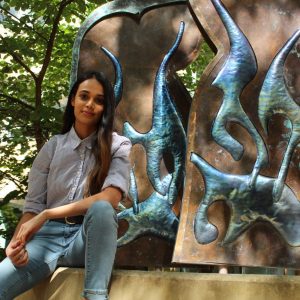
Political Science and International Studies student Lakshitha Nagesh represented CSU at the Harvard Project for Asia and International Relations Summit (HPAIR) this summer.
Chances are you may not be not familiar with the Vaccine Adverse Event Reporting System, or VAERS. Co-managed by the U.S. Centers for Disease Control and Prevention and the Food and Drug Administration, VAERS was established in 1990 to detect possible safety problems with vaccines.
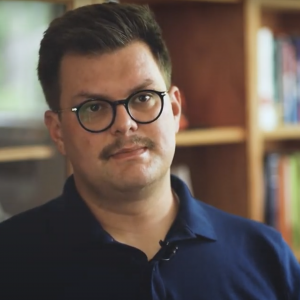
Assistant Professor of Political Science Dominik Stecula’s research interest has always been centered around how the media shapes what people believe. In 2020, the global pandemic provided a rare opportunity to study an international emergence of misinformation, conspiracy theories, and the role media plays in shaping people’s political and personal beliefs.